Moss
Java Moss and similar plants provide dense cover and a huge amount of fine grazing surface.
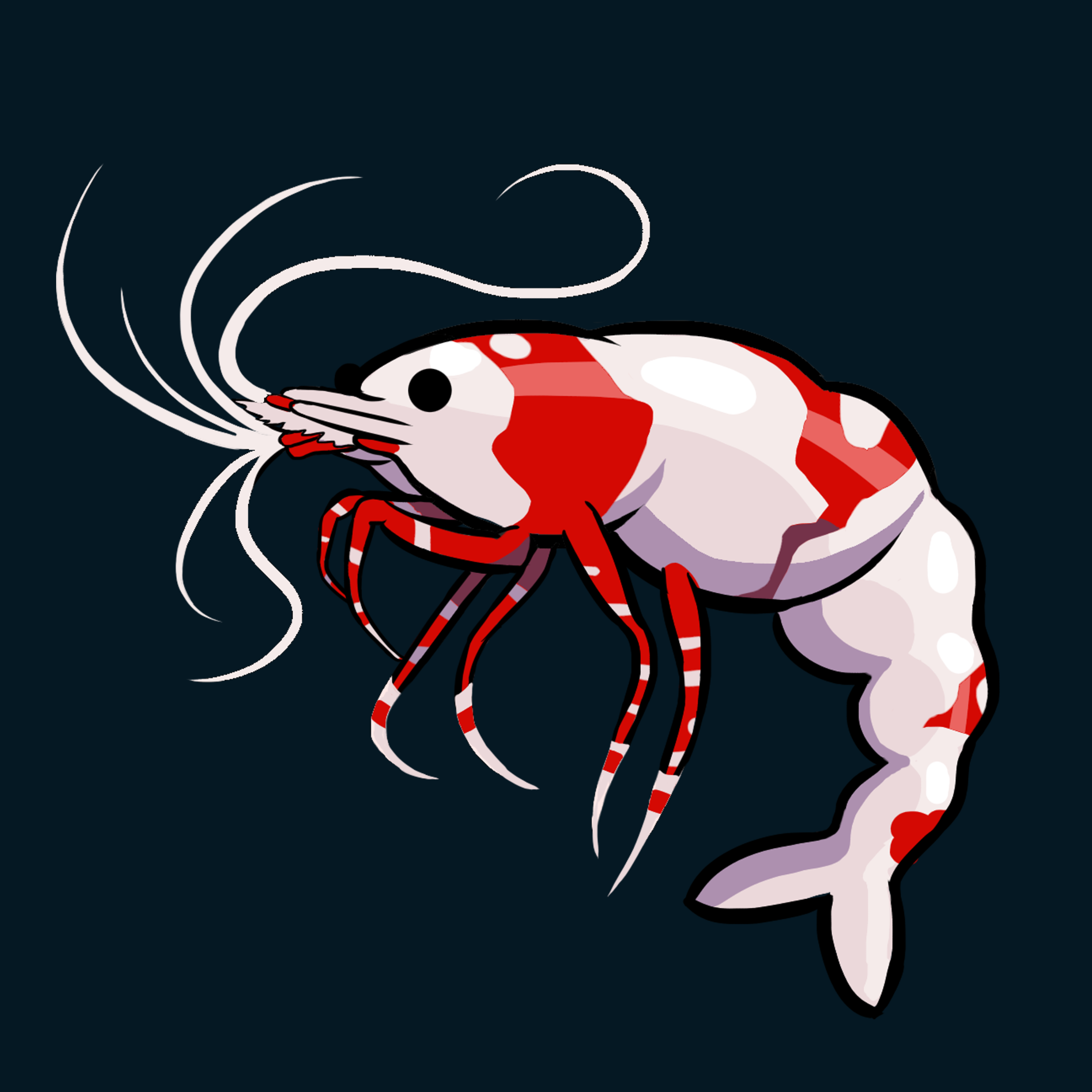
Shrimp care
Neocaridina usually do not need much encouragement to breed. If the colony is healthy, mature and well fed, reproduction often happens naturally. The real work is giving berried females and shrimplets a stable environment where they can survive and grow.
Before breeding
Shrimp breed best when basic care is already working. Stable water, mature biofilm, suitable minerals, regular feeding and low stress matter more than trying to force reproduction.
Males & females
Mature females often have a broader abdomen than males because the underside of the body needs space for carrying eggs. In many colour lines, females may also show stronger coloration.
A visible “saddle” behind the head can indicate developing eggs inside a mature female. After mating, those eggs move beneath the abdomen, where the female carries them on her swimmerets.
Berried females
A female carrying eggs beneath the abdomen is commonly described as berried. She will regularly fan and move the eggs, helping keep them oxygenated and clean.
Avoid unnecessary catching, major rescapes or sudden water changes while females are carrying eggs. Stress can cause a female to drop eggs prematurely.
Hatching
Unlike some other freshwater shrimp, Neocaridina do not require a separate brackish larval stage. The young hatch as miniature versions of the adults and immediately begin grazing.
Newly hatched shrimplets are extremely small and easy to miss. In a planted aquarium, you may not notice them until they have grown for several days or weeks.
Shrimplet survival
Java Moss and similar plants provide dense cover and a huge amount of fine grazing surface.
Suitable dried leaves can support microorganisms and create additional shelter.
Wood, rocks and plant leaves coated in biofilm give tiny shrimp food without forcing them into the open.
Sponge filters are useful because shrimplets cannot easily be pulled into an exposed intake.
Feeding a breeding colony
Breeding colonies have more mouths to feed, but that does not mean the tank should constantly contain visible food. Shrimp will still graze on biofilm throughout the day.
Water changes
Regular partial water changes are still useful in breeding tanks. The goal is to control nitrate and dissolved waste without creating a sudden shift in temperature or chemistry.
Match replacement water reasonably closely to the aquarium and avoid large emergency-style changes unless there is an actual water quality problem.
Colony growth
Once several females begin reproducing, colony size can increase quickly. More shrimp means more feeding, more waste and more demand on the biological filter.
Watch the tank rather than assuming the original setup will handle unlimited growth. At some point you may need to reduce feeding, increase maintenance, separate animals or move part of the colony.
Colour lines
Bloody Mary, Blue Dream, Yellow Goldenback and other Neocaridina varieties are selectively bred colour lines. If different lines are mixed, they can interbreed and produce less predictable coloration over later generations.
If preserving a specific line matters, keep that variety separate and select breeding animals based on the traits you want to retain.
Culling & selection
In breeding, “culling” often means removing animals from the main breeding group because their colour or pattern does not match the line being maintained.
Healthy off-colour shrimp can be moved to a separate colony, sold clearly as lower grade, or kept as pets rather than destroyed.
Tank mates
Many fish sold as peaceful will still eat newly hatched shrimp if given the opportunity. Adults may coexist perfectly while the shrimplet survival rate quietly drops.
If growing the colony is the goal, a shrimp-only tank with snails as optional companions is usually the simplest route.
Common mistakes
Keep reading